Non-Destructive Weld Testing (NDT) - Why It’s Essential in Professional Welding
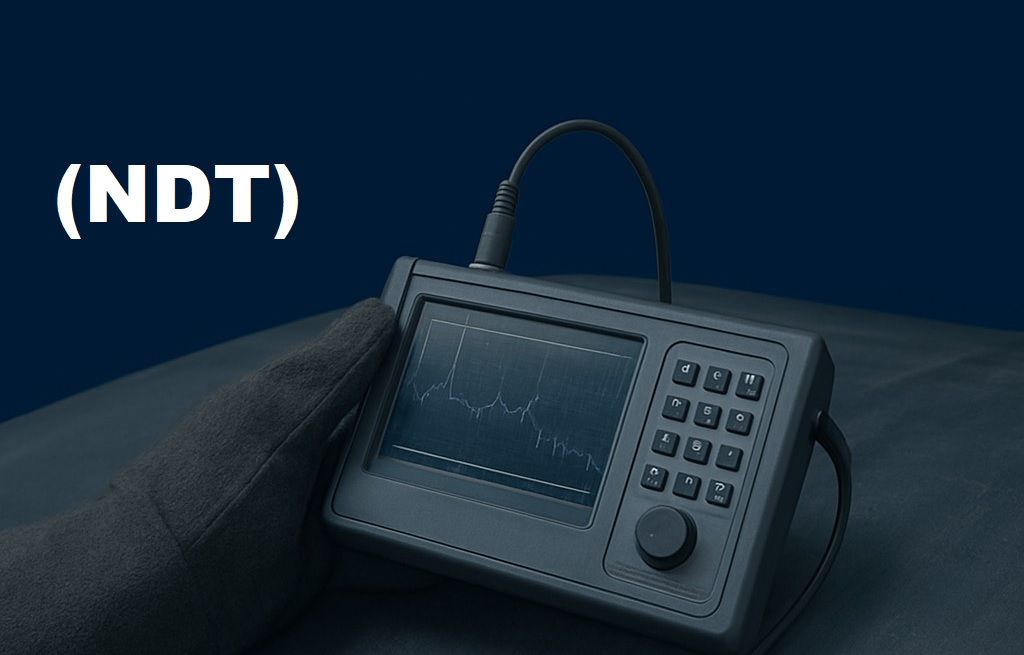
Ensuring that welded structures remain safe and durable for many years requires more than the skill of the welder. An equally important step is confirming whether the weld has been executed correctly. This is where Non-Destructive Testing (NDT) becomes indispensable - a group of methods that allow the evaluation of weld quality without damaging the component. NDT is crucial in traditional fabrication as well as in highly regulated sectors such as the food and pharmaceutical industries.
1. What Is Non-Destructive Testing?
NDT makes it possible to detect discontinuities such as cracks, pores or incomplete fusion without affecting the structure’s integrity. These methods can be applied during production or during periodic inspections.
The key advantages of NDT include:
- no negative impact on the component’s service life
- fast and reliable quality evaluation
- detection of flaws invisible to the naked eye
- full compliance with modern industrial standards
2. The Most Common NDT Methods Used in Welding
2.1. Radiographic Testing (RT)
Radiography uses X-rays or gamma rays to penetrate the weld and reveal its internal structure. The resulting image shows defects such as porosity or incomplete penetration.
Benefits of RT:
- excellent detection of internal flaws
- ability to archive the image for documentation
- ideal for critical or high-risk components
Typical applications:
Pressure vessels, pipelines, storage tanks and structural elements where even minor defects are unacceptable.
2.2. Ultrasonic Testing (UT)
UT uses high-frequency sound waves that travel through the material. When they encounter a flaw, the wave reflects back and creates a characteristic signal on the display. The method is quick, accurate and does not require stopping production.
Advantages of UT:
- precise detection of internal defects
- short inspection time
- safe and clean process for operators
Where UT works best:
Thick-walled components, load-bearing structures and high-responsibility welds.
2.3. Liquid Penetrant Testing (PT)
PT is a surface inspection method. A liquid penetrant is applied to the weld, seeping into tiny surface-breaking defects. After removing the excess penetrant, a developer is applied to draw it back to the surface, exposing the flaw.
Why PT is so popular:
- excellent for detecting micro-cracks
- suitable for stainless steel and aluminum
- affordable and highly precise
Common use cases:
TIG welds, precision components and hygienic process piping.
2.4. Magnetic Particle Testing (MT)
MT magnetizes the component and applies ferromagnetic powder. The powder gathers around areas where the magnetic field is distorted by cracks or imperfections.
Strengths of MT:
- very high sensitivity to surface and near-surface flaws
- fast inspection process
- ideal for carbon steel structures
Limitation:
MT works only on ferromagnetic materials.
3. How to Choose the Right NDT Method?
Selecting the correct inspection technique depends on:
- material type
- weld geometry and thickness
- project-specific requirements
- applicable industry standards
- potential consequences of weld failure
Practical examples:
- RT - when detailed visualization of the weld interior is required
- UT - when speed and accuracy of internal flaw detection matter
- PT - ideal for stainless steel and aluminum, especially for TIG welds
- MT - best for structural steel exposed to dynamic loading
4. Standards and Certifications in NDT
NDT is strictly regulated. Both procedures and personnel qualifications must follow established industry norms.
Commonly referenced standards include:
- ISO 9712 - qualification and certification of NDT personnel
- ISO 5817 - weld quality levels
- ISO 3834 - welding quality management systems
- EN 1090 - structural steel requirements
- ASME standards - widely used in energy and pressure-equipment sectors
Compliance with these standards is essential for certification, audits and legal approval for operation.
5. The Role of NDT in the Food and Pharmaceutical Industries
In industries where hygiene is critical, weld quality must be flawless - not merely acceptable.
Why NDT is vital in these sectors:
- even minor imperfections can trap bacteria
- sanitary pipelines require a perfectly smooth internal surface
- flawed welds can cause contamination or system failure
- audits demand complete NDT documentation
Most commonly used methods:
- PT - preferred for high-purity TIG welds in sanitary systems
- RT/UT - used for thicker or pressurized components
- VT - mandatory visual inspection for every type of weld
Rigorous testing ensures compliance with EHEDG, GMP and 3A standards and guarantees product safety.
Summary
Non-Destructive Testing is one of the cornerstones of modern welding. It enables the detection of flaws without damaging the structure, and the choice of method depends on material type, welding technique and project requirements. In industries where safety and cleanliness are essential - such as food and pharmaceuticals - NDT plays a key role in ensuring process integrity and long-term reliability.
If you need professional welding services, steel structure fabrication, hygienic pipeline installation or expert technical support, we invite you to contact WeldFab. We will gladly advise you, help you choose the right solution and deliver work of the highest quality.